Hi Erin,
I tried responding to your post last night right when I saw your post, but I was way too tired. Let’s try it this time! :)
“The rational paradigm seems to be intertwined with the classical understanding through the focus on the facts and the functions of the subject. These views are not concerned with long, drawn out philosophical explanations but rather explanations that are short and to the point.”
I agree with this statement and some of the ideas you had in the rest of your piece.
Before I say my thoughts, though, I’d like to define Narrative and Rational Paradigm from my perspective. I believe that the rational and narrative world paradigms both contain different types of stories. Both stories are told and interpreted by others with different types of actions. The rational world paradigm does not make actions based on emotion but more instead with logic and an analytical mindset. Thus, the stories are created by the person (as the result of written or spoken text (or action) or are the spoken/written texts themselves) within either the rational or narrative paradigms, and those actions are considered ‘stories’ when they make sense to someone within that way of thinking.
I feel like the rhetorical man lives within the narrative world paradigm. From my perspective, both are able to understand and use ethos, pathos and logos in their appropriate situations.
The serious man lives in the rational world paradigm. The qualities we discussed in class of the serious man are classical, technology-focused, grappler thinker, analytic, after the moment, serious and scientific. I think Pirsig-N is the serious man in this book and he is seeing the world with his serious man lens. The stories he sees are the actions and the meanings he gets from those actions. For example, in his rational world paradigm, how his motorcycle works is a story to him because it is one of his values.
In class we discussed these traits that countered the serious man: emotion (pathos), empirical, casual conversation, wandering around aimlessly, going with the flow, groovy, romantic, spectator, doer, holistic, in the moment, contingent and artistic. (Not the same as the rhetorical man by the way, but I’ll get there later)
Up until now I believed that both oppositions are describing types of people in the rhetorical lens. However, now I want to add that when someone isn’t following the traits of one lens in any given moment, the person with that lens tends to describe them as the opposite (I think). For example, I believe we’re reading this book so far with Pirsig-N’s lens. To him, John is “going with the flow,” but maybe to us in our current lens, John is being normal and “human.”
In my perspective, Phaedrus fits the opposite of the serious man with his pursuit of philosophy when he moves away from the scientific lens that sees a select few “truths” in the world.
In my blog response to Jared last week, I discussed the possibility that serious man has ethos and logos whereas the rhetorical man has ethos, pathos and logos. However, now I want to make another adjustment. I believe that the serious man does not realize they are performing rhetoric because they do not subscribe to that way of thinking. Every human being performs rhetoric when they do something with a purpose that results in some sort of action (or story, depending on the specific meaning with get from the action). I still believe that ethos and logos are traits of the serious man, but the serious man is still performing ethos, pathos and logos when they communicate with other people based on the reactions they earn from other people (frustration from Chris etc). The serious man may value ethos and logos much more than pathos (at least Pirsig-N might), but they still have pathos as one of their values because they are passionate enough in their values toward their lens/ways of seeing the world. (Plus they can feel anger, but perhaps cannot relate/reason why?
I need to say this though: I can definitely see how
I’m a serious man in some moments of my life because at the beginning of the
text when I tried to analyze this book, I thought Persig-N’s behavior was
normal/appropriate. Sometimes I thought how he treated Chris was appropriate as
well. However, when I snapped out of that mindset, I thought about Pirsig-N as
a human being, I realized how unkind he was being in my other lens. For
example, I wouldn’t have thought that Chris had a mental illness. I would have
assumed he was just a kid who wanted attention from his father. If I was Pirsig-N,
I would have tried to be kind and let him have breakfast for dinner instead of
letting him go to bed hungry. I would have tried to be understanding/relatable
and ask him how he was doing on the trip etc.
Okay, I admit, I’m the serious man a lot. When I get into an analytical mindset, I’m not very receptive to other people’s emotions. It doesn’t really click to me. I can be impatient and non-sympathetic, depending on my mood/mindset. Almost always, though, when I go on a walk or have some time to transition from that mindset, I realize how unkind I may have been and then I try to make amends with that person. I’ve often thought that I need to find some way to strike a balance between being too analytical and just being human when I talk with people when I’m in the middle of analyzing something because I understand that it can turn people off.
All in all, I’m a very loving person and I try to be understandable, but a lot of the time I just lose sight of my emotions and how I affect other people when I try to be analytical/ask questions/play with ideas. (Like this post, I suppose. I apologize.)
Also, I want to say that I think that Phaedrus & Pirsig-N are perhaps two different lenses that the author uses to see the world. I wonder that if we merge those two lenses together, we may get Robert M. Pirsig. (I predict that we’ll see that merge at the end of the book, but we’ll see)
Lastly, as referenced earlier, I do not believe that the rhetorical man is the same as Phaedrus by the way. I’m starting to wonder if perhaps the rhetorical man are people in everyday life who can be a Phaedrus or a serious man form moment to moment. For example, Robert M. Pirsig is the rhetorical man because he has both the serious man and opposite of the serious man within himself (as do I when I realize my analytical mindset and my non-analytical mindset).
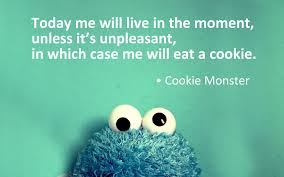
Okay, I admit, I’m the serious man a lot. When I get into an analytical mindset, I’m not very receptive to other people’s emotions. It doesn’t really click to me. I can be impatient and non-sympathetic, depending on my mood/mindset. Almost always, though, when I go on a walk or have some time to transition from that mindset, I realize how unkind I may have been and then I try to make amends with that person. I’ve often thought that I need to find some way to strike a balance between being too analytical and just being human when I talk with people when I’m in the middle of analyzing something because I understand that it can turn people off.
All in all, I’m a very loving person and I try to be understandable, but a lot of the time I just lose sight of my emotions and how I affect other people when I try to be analytical/ask questions/play with ideas. (Like this post, I suppose. I apologize.)
Also, I want to say that I think that Phaedrus & Pirsig-N are perhaps two different lenses that the author uses to see the world. I wonder that if we merge those two lenses together, we may get Robert M. Pirsig. (I predict that we’ll see that merge at the end of the book, but we’ll see)
Lastly, as referenced earlier, I do not believe that the rhetorical man is the same as Phaedrus by the way. I’m starting to wonder if perhaps the rhetorical man are people in everyday life who can be a Phaedrus or a serious man form moment to moment. For example, Robert M. Pirsig is the rhetorical man because he has both the serious man and opposite of the serious man within himself (as do I when I realize my analytical mindset and my non-analytical mindset).

No comments:
Post a Comment